
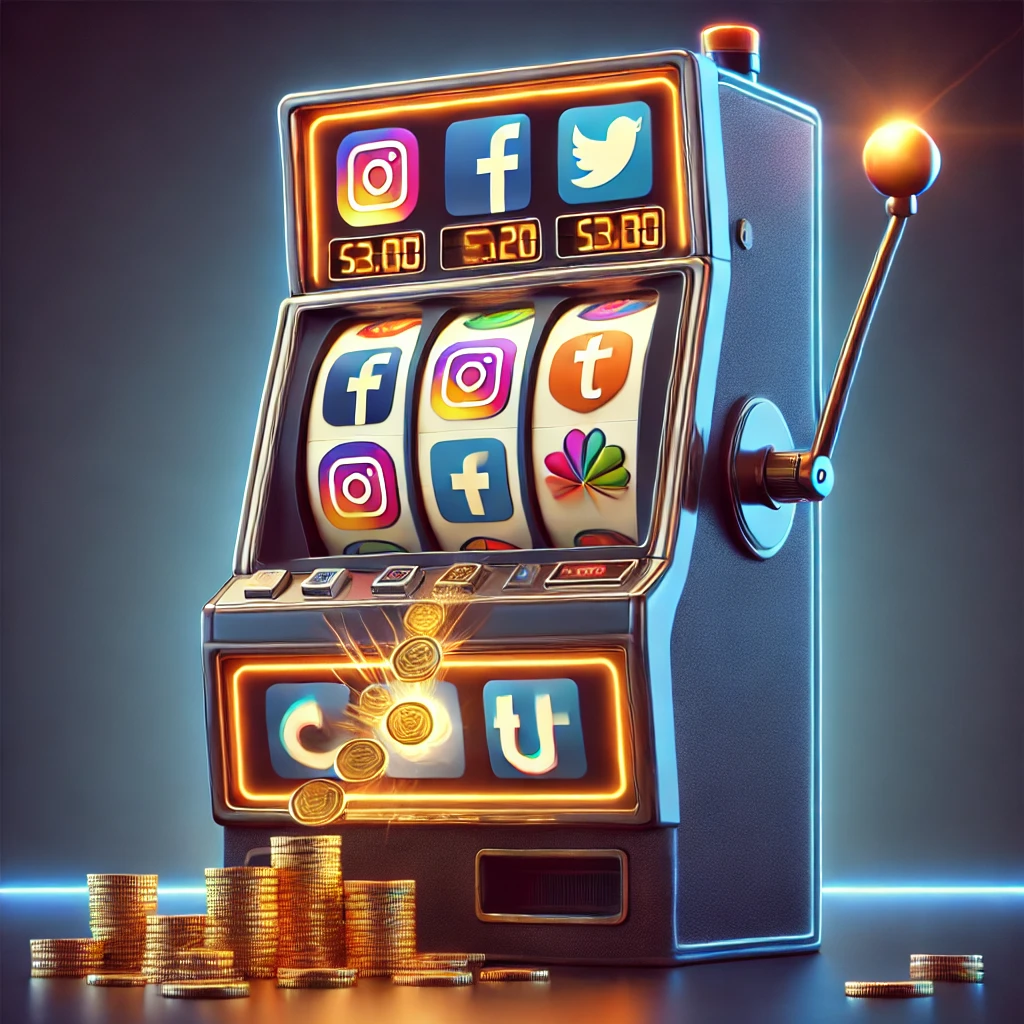
Imagine this: businesses worldwide poured a staggering $219.8 billion into social media ads in 2024, yet 74% of people say they're tired of seeing them (Statista, 2024). At SERPentity, a leading UK-based SEO and web design agency, we've watched companies—big and small—chase likes, comments, and clicks, only to end up with empty wallets and no real customers. Why does this keep happening? The answer lies in a psychological trap: the same "dopamine hit" that keeps you scrolling Instagram or TikTok is luring businesses into wasting money on social media ads, with little to show for it in terms of leads, sales, or ROI.
This isn't just bad budgeting—it's a brain game. Social media platforms like Meta, Twitter, and LinkedIn thrive on engagement, raking in billions while businesses get hooked on the thrill of a notification ping. The result? A cycle where companies spend more to feed the algorithm, but the profits land in Silicon Valley, not their bottom line. At SERPentity, we've seen this firsthand—clients obsessed with vanity metrics, ignoring the metrics that matter.
In this article, we'll uncover the science behind this dopamine-driven trap, expose why likes don't equal sales, and reveal how platforms profit while businesses flounder. We'll back it with evidence, from brain scans to budget breakdowns, and offer practical ways to break free. Curious if your ad spend is working? Start with our free SEO audit to see where your money's really going. Let's dive into why businesses are wasting money on social media ads—and how to stop.
Key Insight: The same dopamine hit that keeps users scrolling is making businesses addicted to spending on social media ads, despite poor ROI.
The Dopamine Hit – Why Businesses (and Users) Can't Quit Social Media
The Science Behind the Dopamine Hit in Social Media
Ever wonder why a single "like" on your latest ad campaign feels so good? It's not just ego—it's your brain. Dopamine, a neurotransmitter tied to motivation and reward, floods your system when that notification pops up. As a UK SEO agency, we at SERPentity know this isn't just a user problem—it's a business one too. When you post an ad and see likes roll in, your brain's reward system, specifically the nucleus accumbens, lights up like a slot machine payout. A 2016 UCLA study using fMRI scans showed this exact reaction in teenagers viewing Instagram likes, with brain activity mirroring responses to winning money or eating chocolate (UCLA Newsroom, 2016). Businesses get the same rush.
The Dopamine Effect
When your ad gets likes, your brain's reward system activates in the same way it does when:
- Winning money
- Eating chocolate
- Receiving praise
This creates a powerful feedback loop that keeps businesses spending.
But here's the twist: dopamine isn't just about pleasure—it's about anticipation. Neuroscientists now argue it's more about motivating you to seek rewards than enjoying them (The Guardian, 2018). When you launch a Facebook ad, you're not just basking in the likes—you're hooked on checking for more. This creates a feedback loop: post, wait, check, repeat. Sound familiar? It's the same cycle that keeps users scrolling—and it's why businesses can't quit pouring cash into platforms.
The Slot Machine Effect: Unpredictable Rewards
Social media ads don't deliver predictable results, and that's by design. Likes, comments, and clicks come sporadically, mimicking the intermittent reinforcement of a slot machine. This unpredictability spikes dopamine more than a guaranteed payoff, according to research from Dartmouth (Dartmouth Undergraduate Journal of Science, 2022). For businesses, this means every ad campaign feels like a gamble—will it hit 100 likes or 1,000? Will it go viral or flop? The uncertainty keeps marketing teams coming back, budget in hand, even when sales don't follow.
Real-World Example
A small UK retailer we worked with at SERPentity spent £500 on a Twitter ad, got 300 likes, and felt like rockstars—until they realized not a single sale came through. The dopamine hit was real; the ROI wasn't.
Platforms like Twitter and Instagram exploit this, tweaking algorithms to prioritize engagement over conversions. They know you'll keep spending to chase that next high.
The Psychological Trap: Validation Over Results
Why does this hook businesses so deeply? It's psychological. Humans crave social validation—an evolutionary leftover from when group acceptance meant survival. Likes and comments tap into that need, offering a quick hit of approval. For businesses, this translates to a false sense of success. A flood of likes feels like brand awareness, but awareness without action is just noise. Our blog dives deeper into digital marketing psychology, showing how these traps derail even savvy marketers.
The kicker? Businesses aren't users—they're supposed to be sellers. Yet, the same brain chemistry that keeps a teenager refreshing Snapchat snares companies into mistaking engagement for profit. A 2023 study found that 65% of businesses see no measurable ROI from digital marketing, with social media often the weakest link (Exposure Ninja, 2023). At SERPentity, we've seen clients fall into this trap—spending thousands on ads that rack up likes but leave sales flat. The dopamine hit keeps them hooked, but it's the platforms cashing in.
Likes, Comments, and Traffic: Why Vanity Metrics Fool Businesses
The Mirage of Vanity Metrics
At SERPentity, we've seen it too often: a business spends £1,000 on a Facebook ad, gets 500 likes, 200 clicks, and a handful of comments, then calls it a win. But when we dig into the numbers, there's no sales bump, no new leads—just a dopamine-fueled illusion of success. These are vanity metrics: shiny numbers like likes, shares, and traffic that trigger a feel-good rush but rarely translate to real ROI. As a UK SEO and web design agency, we know the difference between engagement and profit—and social media ads often deliver the former, not the latter.

Vanity Metrics
- Likes
- Shares
- Comments
- Followers
- Page views
Business Metrics
- Conversions
- Sales
- Revenue
- Customer acquisition cost
- Return on investment
Why do these metrics mislead? They're easy to measure and satisfying to see. A 2023 Exposure Ninja survey found that 65% of businesses report no measurable ROI from digital marketing, with social media frequently cited as the weakest performer (Exposure Ninja, 2023). Yet, companies keep pouring money in, hooked on the validation of a "successful" campaign. It's the same psychological trap users fall into—likes feel like approval—but businesses aren't here to feel good; they're here to grow.
Real-World Disconnect
Take a client we worked with in Sheffield: a small retailer ran an Instagram ad campaign targeting local shoppers. The result? 300 likes, 50 comments, and a spike in website visits. The dopamine hit was palpable—until they realized not one visitor converted. Compare that to our SEO case studies, like The Stairs Guys, where targeted SEO drove measurable sales, not just applause. Vanity metrics look impressive in reports, but they don't pay the bills. The disconnect lies in mistaking awareness for action—likes don't mean loyalty, and clicks don't mean cash.
Likes don't pay bills, conversions do. Stop chasing the dopamine hit and start pursuing real business results.
This isn't just anecdotal. A 2021 Teen Vogue piece on social media's mental grip notes how chasing engagement can desensitize reward systems, pushing businesses to need more likes for the same satisfaction (Teen Vogue, 2021). For marketers, this means bigger budgets for diminishing returns—a trap we help clients escape with smarter strategies.
Social Media Platforms Are Getting Richer – And It's Not You
The Platform Payday
While businesses chase vanity metrics, social media platforms laugh all the way to the bank. In 2023, Meta alone raked in $153 billion in ad revenue, a chunk of it from companies like yours (Statista, 2023). At SERPentity, we're not here to bash platforms—we're here to help businesses see the game. Every pound you spend on ads feeds an ecosystem designed to keep users (and advertisers) hooked, not to guarantee your sales. The real winner? The platforms profiting off your budget.
How do they do it? Algorithms prioritize engagement—likes, shares, comments—over conversions. A post that sparks debate or goes viral keeps users scrolling, boosting platform ad impressions. But for businesses, that viral post might not drive a single lead. A 2017 SEO Training London analysis of 500+ SMEs found social media rarely outperformed organic search for sales, yet it ate up 58% of marketing budgets (SEO Training London, 2017). Platforms don't care if you convert—they care if you keep spending.
The Algorithm Slot Machine
It's not just design; it's psychology. Social media ads operate like slot machines—unpredictable outcomes keep you playing. One campaign might hit 10,000 views; the next flops at 100. This variability, tied to ever-shifting algorithms, mirrors the dopamine-driven intermittent reinforcement we discussed earlier. A 2018 Business Insider piece likened Instagram likes to gambling, and the same applies to ad performance (Business Insider, 2018). Businesses double down, hoping the next ad "wins," while platforms pocket the cash.
Did You Know?
Social media platforms employ the same psychological techniques as casinos to keep you spending money, hoping for a big win.
Who's thriving here? Not the UK café owner we helped at SERPentity, who wasted £2,000 on TikTok ads for zero sales. Not the e-commerce store stuck in a bidding war for ad space. It's Meta, Twitter, and LinkedIn, tweaking rules to keep you guessing—and spending. Want a controlled alternative? Our PPC services offer precision targeting without the dopamine gamble. Platforms profit by keeping you in the game; we profit when you win.
The Real Cost of Wasting Money on Social Media Ads
Financial and Opportunity Costs
The dopamine trap doesn't just fool businesses—it bleeds them dry. According to the CMO Survey, companies allocate 18.5% of their marketing budgets to social media, yet 36% of marketers can't pinpoint which channels drive leads (CMO Survey, 2023). At SERPentity, we've seen UK businesses waste thousands chasing likes instead of customers. A Sheffield retailer we advised spent £3,000 on Instagram ads over six months—resulting in 1,200 clicks but just two sales. That's a cost-per-sale of £1,500, far beyond reason.
Real Client Example: Sheffield Retailer
The financial hit is bad enough, but the opportunity cost stings more. That £3,000 could have funded local SEO to dominate Google searches in Sheffield or built a conversion-focused website via our small business website packages. Instead, it vanished into the social media void. Exposure Ninja reports 88% of marketers find PPC and social ads too pricey or ineffective, yet U.S. social ad spending alone is projected to hit $72.33 billion in 2023 (YesAssistant, 2023). UK trends mirror this—money flows out, results don't flow in.
The Mental Toll
Beyond budgets, there's a human cost. Marketing teams burn out chasing trends—reels today, stories tomorrow—fueled by the dopamine chase but drained by lackluster ROI. For e-commerce clients, like those we've helped with e-commerce SEO, the pressure to outbid competitors on ad platforms adds stress without guaranteed returns. It's a losing battle when platforms keep shifting the goalposts.
Stop Wasting Money on Social Media Ads: Actionable Solutions
Refocus and Optimize
How do you break free? At SERPentity, we tell clients: stop chasing likes, start chasing conversions. Use tools like Google Analytics with UTM codes to track what actually drives sales—not just clicks. Shift budgets to proven channels. Organic SEO, which 77% of marketers rank as their top performer (Exposure Ninja, 2023), beats social ads hands down. Our technical SEO and on-page SEO services optimize your site to rank and convert, not just impress.
Track Real Conversions
Use Google Analytics with UTM codes to see what actually generates sales, not just traffic.
Test with Small Budgets
Run £100 ad experiments and cut what doesn't convert within a week.
Shift to Proven Channels
Reallocate budget to organic SEO, which 77% of marketers rank as their top performer.
Choose Platforms Strategically
Use LinkedIn for B2B, not TikTok for a Chesterfield plumber.
Test small—run £100 ad experiments, cut what doesn't work within a week. Leverage psychology smarter: use testimonials on a site built by our website design team to build trust, not just likes. Pick platforms wisely—LinkedIn for B2B, not TikTok for a Chesterfield plumber. Need skills to take control? Our SEO training course empowers your team to ditch the ad crutch.
Real Alternatives
A Leeds café we worked with dropped £800 monthly social ads for off-page SEO, gaining backlinks that tripled their organic traffic in three months. No dopamine gamble—just results. Ready to rethink your strategy? Contact us to stop wasting money and start winning.
Success Story: Leeds Café
A Leeds café redirected their £800 monthly social media ad budget to off-page SEO, resulting in:
Conclusion: Stop Feeding the Platforms – Start Building Your Business
Social media ads promise the world but deliver a dopamine hit that hooks businesses while fattening platform profits—Meta's $153 billion haul proves it. At SERPentity, we've laid bare the trap: the brain's reward system lures you into vanity metrics, platforms rig the game for engagement over sales, and budgets vanish without ROI. The cost isn't just financial—it's missed chances to grow smarter.
Break the cycle. Audit your ad spend—our free SEO audit is a start. Ditch likes for leads, redirect funds to SEO or a site that converts, and measure what matters. Across the UK, from Sheffield to Leeds, we've helped businesses thrive beyond the social media mirage—check our work in locations we service. Platforms thrive on your budget; make sure your business thrives too.
Ready to Break Free from the Social Media Trap?
Get a free SEO audit to see where your marketing budget could be better spent.
Contact Us TodayWhat's your experience with social ad ROI? Drop a comment below—we'd love to hear!